


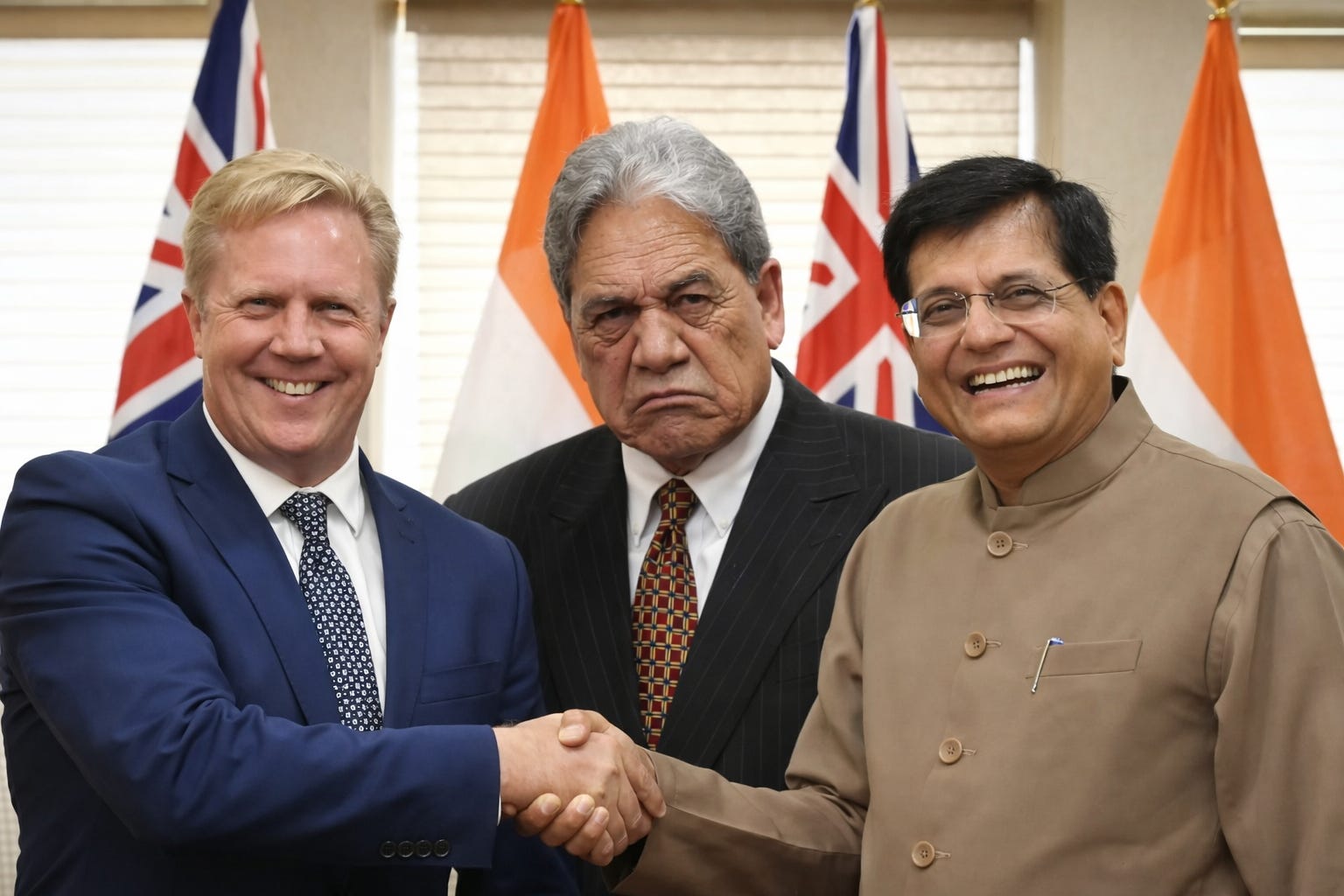
Even though I am on annual holidays, I thought it was right to write something on this topic, because in my opinion we really are losing our Kiwi way of life in some ways. If there is one thing New Zealanders should be alert to right now, it is the quiet habit of governments giving too much away in the name of “progress”, while ordinary people are left to deal with the consequences.
That is why New Zealand First is right to be deeply sceptical about the so called free trade deal with India. Not because trade is bad in principle, but because this deal looks neither free nor fair, and it once again treats immigration concessions as a bargaining chip rather than a national interest issue.
Winston Peters has been blunt, and he should be. If a deal “gives too much away, especially on immigration, and does not get enough in return”, then it is not a deal worth signing. It is capitulation dressed up as diplomacy.
India is already the single largest source of migrants into New Zealand. Under National, that trend has not slowed, it has accelerated. We are told repeatedly that everything is under control, that skills shortages justify the settings, and that any concern is somehow motivated by prejudice. That is a lazy and dishonest argument.
Here’s a few of my past articles critical of Indian mass immigration


This is not about racism. It is about opposing mass immigration policy that is reshaping communities faster than infrastructure, housing, wages, or social cohesion can keep up. New Zealand is widely known as one of the easiest countries in the world to migrate to and eventually obtain citizenship. People respond to incentives. Governments set those incentives.
The demographic signals are already flashing red. Singh was the number one surname for babies born in New Zealand for the seventh year in a row. That fact alone should prompt a serious national conversation about scale, speed, and cultural balance. Instead, it is either ignored or waved away as something we are not allowed to talk about.
I have said it before, and I will keep saying it. We need more nurses. We need more doctors. We need genuinely critical skills that lift the whole system. What we do not need is an immigration pipeline that floods the lower end of the labour market, suppresses wages, and leaves young Kiwis locked out of opportunity. A country cannot import its way to prosperity if the settings are wrong.
Yet here we are again, with National championing a trade deal that delivers very little for dairy, our economic backbone, while conceding more visa access as if it costs nothing. India remains fiercely protective of its own dairy sector. New Zealand, by contrast, keeps opening the door wider and wider. That imbalance should worry anyone who cares about sovereignty, not just trade flows.

Prime Minister Christopher Luxon can call this deal “historic” all he likes. History is full of deals that looked impressive on paper and hollow in hindsight. Seven trips by ministers and grand trade missions do not magically turn a weak deal into a strong one.
India will always act in India’s interests. That is exactly what a serious country should do. The question is whether New Zealand is still capable of doing the same, or whether we have convinced ourselves that saying no is impolite.

If this deal really does hinge on opposition support because NZ First refuses to rubber stamp it, then good. Parliament should be forced to debate what is being traded away, especially when it comes to immigration. Once you give that ground up, you do not easily get it back.
Trade should benefit New Zealanders first. Immigration policy should serve the long term stability of the nation, not the short term political vanity of ministers chasing headlines. If we keep pretending those two things are unrelated, we should not be surprised when the New Zealand we wake up to feels less and less like home.
🔒For paid subscribers
“The Great Replacement” is always dismissed as a conspiracy theory, a term used to shut down debate rather than engage with reality. But when Singh has become the most common surname for babies born in New Zealand for the seventh year in a row, it is hard to argue that nothing is changing. You might disagree on motives or causes, but we are clearly witnessing a demographic replacement take place…
