
Maiki Sherman resigns: when did words become career-ending?
Now, let me start by saying this. I have never been the biggest fan of Maiki Sherman. Like much of the mainstream media in New Zealand, her reporting has always leaned heavily to the far-left, and there were plenty of nights watching TVNZ where it felt like centre-right politicians were being hunted down over the most trivial nonsense imaginable.
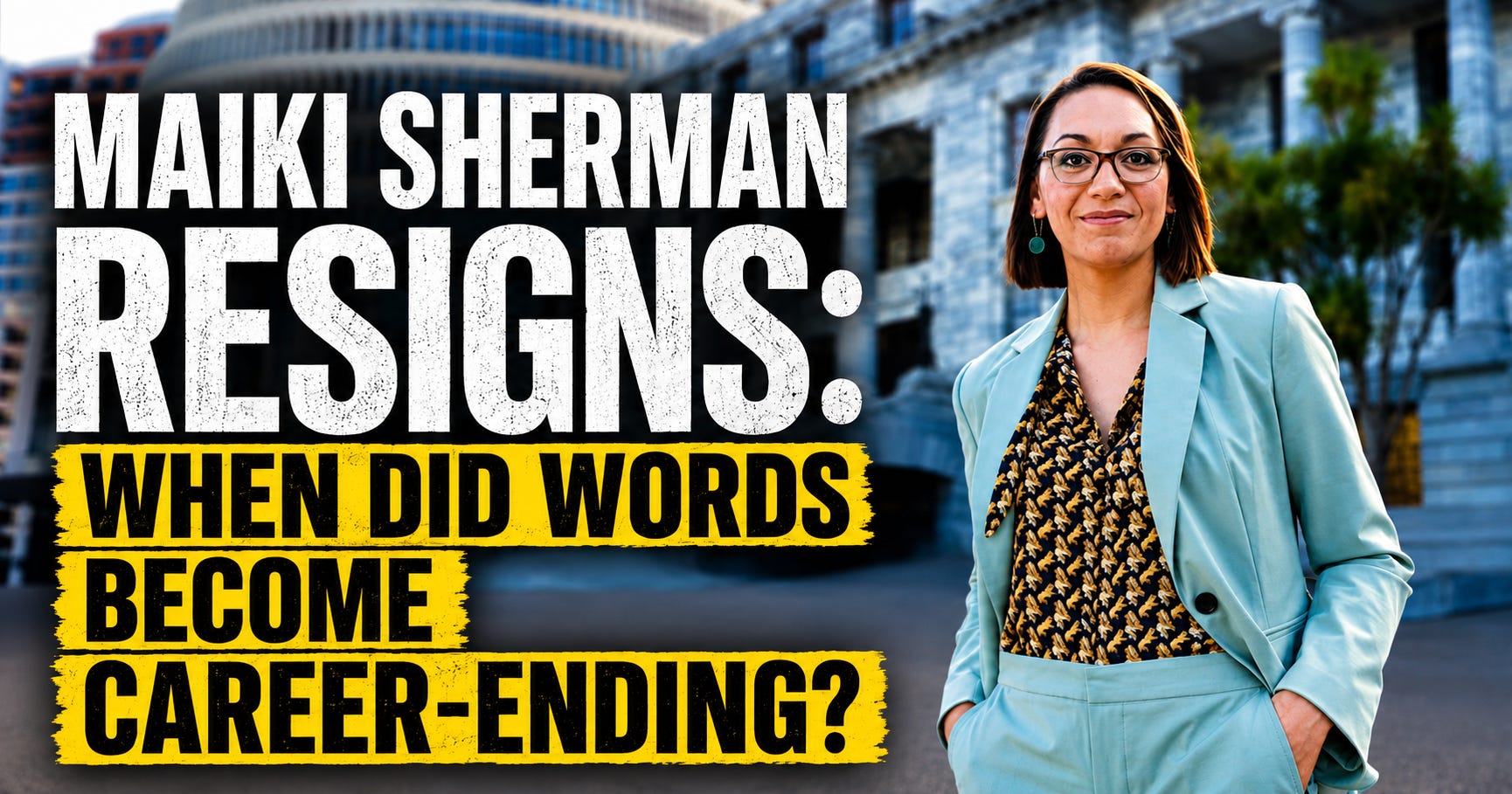
So no, I am not exactly mourning the fact she will no longer be fronting political coverage every evening.
But despite that, I also do not think she should have resigned over this.
This week, Sherman quit TVNZ after renewed attention over comments she made nearly a year ago during pre-Budget drinks in Finance Minister Nicola Willis’ office. Sherman admitted she used the word “faggot” towards Stuff journalist Lloyd Burr. She apologised the following morning, informed management at the time, and by all accounts the matter had been dealt with privately. The issue only exploded publicly after it resurfaced in a column by Substack commentator Ani O’Brien.
TVNZ praised Sherman’s work in its buzz-word filled, farewell statement, describing her as the first wahine Māori to lead 1News’ political team and highlighting her nomination for Political Journalist of the Year. Sherman herself said the “level of scrutiny” had made her role “untenable”.
That word again. Untenable.
It is remarkable how quickly modern society has abandoned the old idea that words are just words. Many of us grew up hearing the saying: “sticks and stones may break my bones but words will never hurt me.” These days, one stupid remark can apparently destroy a career.
Was it an offensive word? Maybe. Was it classy? Yeah, nah. Was it worth someone effectively being pushed out of one of the biggest jobs in New Zealand journalism? I don’t think so.
Context matters too. Sherman stated the comment came after “deeply personal and inappropriate remarks” were directed at her during the evening. That does not excuse the language, but it does explain how people sometimes react in heated moments. Human beings are flawed. They say dumb things. Especially after drinks.
What bothers me more is the growing culture of selective outrage. The same media world that routinely dishes out insults, labels, and attacks towards political opponents suddenly acts horrified when one of their own uses language that would have barely raised an eyebrow twenty years ago.
There is also something strangely fragile about modern public discourse. If someone calls me a name, I genuinely could not care less. People can say whatever they like about me. The only time words sting is when there is a grain of truth behind them, and if that happens, that is my problem to sort out, not society’s responsibility to protect me from discomfort.
That is what seems to have disappeared. Resilience.
If a grown adult is emotionally shattered because somebody used an offensive slur in jest or in anger, perhaps the issue is not simply the word itself. Perhaps we have conditioned people to believe that every insult requires institutional punishment and public humiliation.
To be clear, I am not defending the word. It doesn’t offend me. But there is a massive difference between saying something offensive and being some kind of hateful monster deserving of professional destruction.
Sherman had already apologised. The matter was already known internally. Nobody was demanding police involvement, nobody was alleging violence, and nobody appeared traumatised enough to pursue anything further at the time.
Yet in 2026, that is no longer enough. Apologies are temporary. Public shame is forever.
Ironically, this entire saga says more about modern media culture than it does about Sherman herself. Journalists spend years demanding resignations, public accountability, investigations, and consequences for everyone else. Eventually the outrage machine turns inward and devours its own.
That is exactly what happened here.
Like I said, I will not particularly miss seeing Maiki Sherman on the news every night chasing down politicians over manufactured drama. But I also think New Zealand has become far too eager to ruin people over words, especially when those words were uttered privately, apologised for immediately, and clearly never intended to become a national scandal.
If every journalist, politician, or public figure in this country had their worst drunken remark dragged into the spotlight, there would not be many careers left standing.


