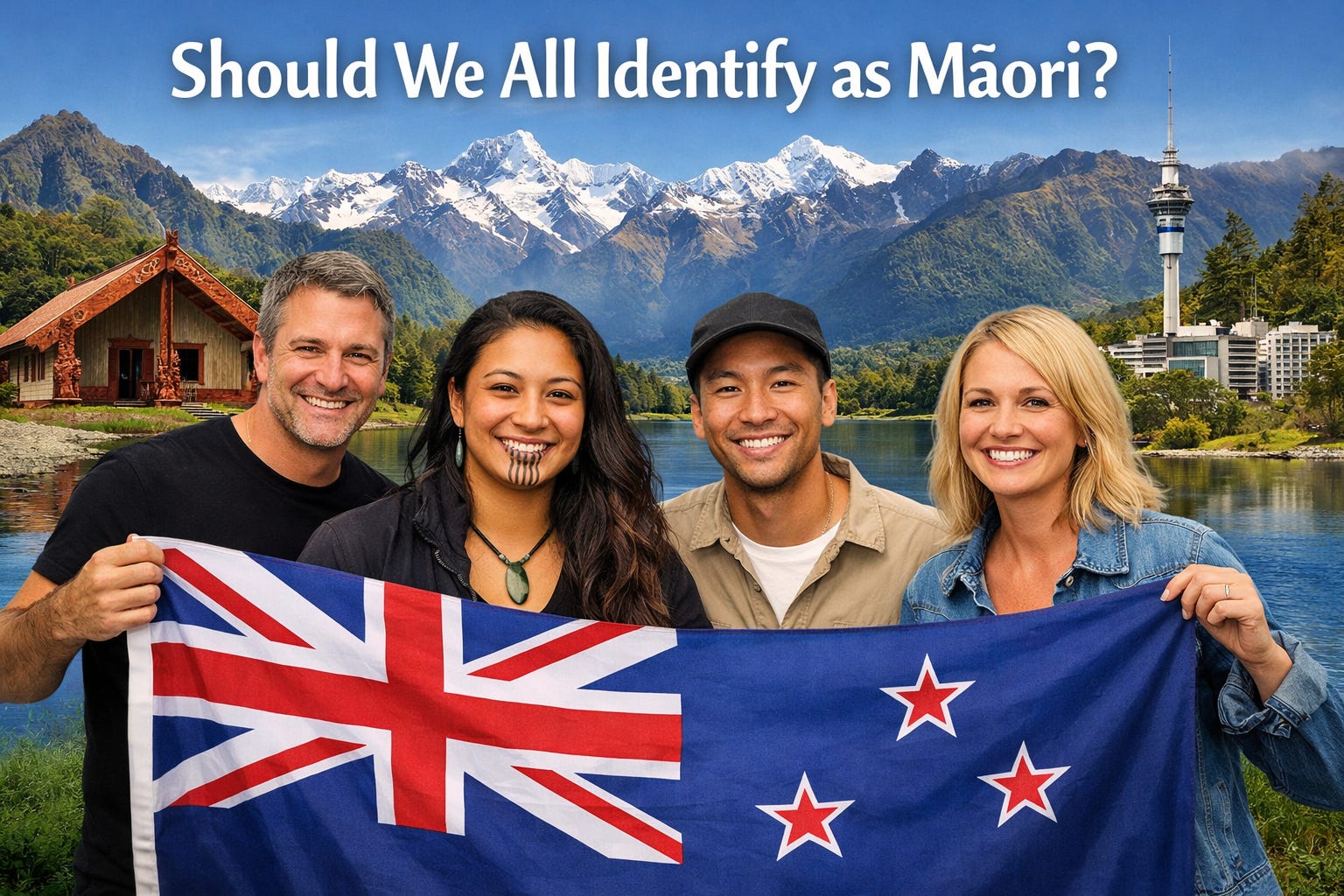
Maybe everyone in New Zealand should identify as Māori?
At this point, perhaps the simplest solution to New Zealand’s growing maze of race-based policy is for everyone to just identify as Māori.
Not because it reflects whakapapa. Not because of culture, reo, or the tikanga mumbo jumbo. But because, increasingly, identity appears to be the key that unlocks access to extra benefits, priority lanes, special funding, separate governance structures, lower tax rates and exemptions from rules that apply to everyone else.
If eligibility is based on how you identify, then why should anyone opt out.
We are told identity is fluid. We are told it is self-defined. We are told it is deeply personal and not for others to question. If that is the framework, then surely it applies equally to all New Zealanders.
Under the current direction of travel, identifying as Māori can mean priority access in healthcare, targeted housing programmes, dedicated education pathways, business grants unavailable to others, and political representation via separate structures that sit alongside, or above, general democratic processes.
For those who do not identify as Māori, the message is pretty clear. You can pay into the system, but you will not necessarily receive from it on equal terms.
This is not an argument against helping those in need. If poverty, poor health outcomes, or educational disadvantage exist, support should go to people experiencing those conditions. Full stop. But when assistance is distributed primarily on the basis of ethnicity rather than circumstance, resentment is inevitable.
New Zealand has spent decades telling people that race should not determine opportunity. Now we are building systems that do exactly that.
So why not level the playing field in the most literal way possible.
If everyone identifies as Māori, then everyone qualifies. No one is excluded. No one is told they are on the wrong side of history. No one is lectured about privilege while struggling to pay rent or see a GP.
Of course, this idea would immediately be condemned as offensive, disrespectful, or mocking. Yet the underlying logic comes directly from the same ideology that insists identity is paramount and self-defined.
You cannot simultaneously argue that identity is personal and unquestionable, then demand documentation, genealogy, or approval when someone adopts it.
Either identity matters, or circumstances matter. Either we are equal citizens, or we are not.
The uncomfortable truth is that most New Zealanders do not oppose fairness. What they oppose is a system where two people can stand side by side, face the same struggles, yet receive different treatment from the state purely because of ancestry.
If equality is the goal, then policies must be universal, needs-based, and blind to race.
Until then, do not be surprised if people start asking the obvious question.
If identifying as Māori brings tangible advantages in modern New Zealand, why wouldn’t everyone do it.
Because when identity becomes currency, people will inevitably try to spend it.