
Move-on orders: useful tool or dangerous overreach?
The Government’s introduction of move-on orders has sparked plenty of debate. Whenever a new power like this is handed to authorities, it is worth pausing for a moment and asking the obvious question, how far could it go?
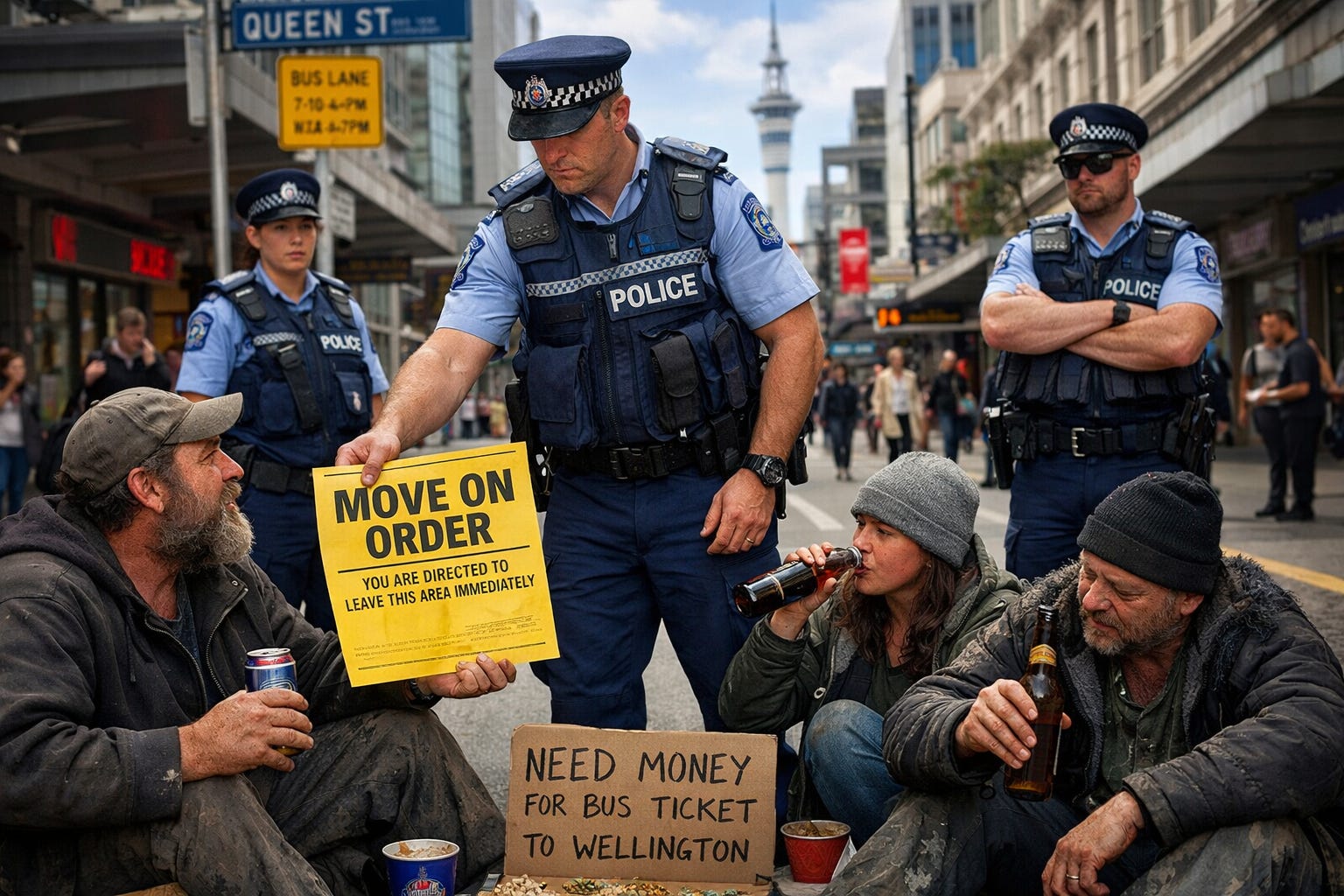
On paper, move-on orders sound straightforward enough. Police or authorised officers can instruct people to leave an area if they are causing disruption, intimidation or disorder. Most people would probably agree that authorities should have some way to deal with genuinely antisocial behaviour in public spaces.
The concern is not the idea itself. The concern is how easily it could be stretched beyond the situations people imagine when they first hear about it.
Consider protests. In theory, a move-on order could be issued to almost any group gathering in a public space. Anti-abortion activists standing outside Britomart, a pro Palestine group rallying in the city centre, or any protest that becomes politically inconvenient could suddenly find themselves told to pack up and leave.
It does not require much imagination to see how such powers could be applied selectively. Protests that sit comfortably with the political mood of the day may be tolerated, while others are treated as “disruption” and dispersed.
The reality is that governments rarely introduce powers they do not intend to use. Once they exist, they inevitably expand beyond the narrow situations originally used to justify them.
Imagine if move-on orders had existed during the parliamentary occupation in Wellington. Would authorities have used them early on to break up the protest before it grew? Perhaps. That alone should make people think carefully about the precedent being set.
That said, there is another side to this issue, particularly when it comes to the growing problem of aggressive begging in central city areas.
Anyone who regularly walks through a CBD will know the situation. It is barely past 7.30 in the morning, you have not even had your first coffee, and someone is already stepping into your path asking for money. Often they are holding a McDonald’s cup with a few coins rattling inside, hoping the sound will encourage passersby to contribute.
Many people feel pressured into giving something just to avoid the awkwardness of refusing.
The uncomfortable truth is that a large portion of this begging has become a routine income stream rather than a last resort. The same individuals often appear in the same spots day after day with the same stories. One day it is a bus ticket to Wellington. The next day the sign has not changed.
Meanwhile, many of the people doing the begging are already receiving taxpayer-funded assistance and accommodation.
That is why some level of enforcement around aggressive begging does make sense. Public spaces should feel safe and comfortable for everyone using them, not just those who choose to occupy them all day.
No one enjoys walking through a city centre lined with people sleeping in bus shelters or approaching every passerby for money or cigarettes. It creates an atmosphere that is unpleasant for residents and visitors alike.
There are, of course, exceptions. Someone genuinely stranded in New Zealand without access to government assistance or help from their home country might find themselves in a desperate situation. In those cases, a degree of compassion is entirely reasonable. Then again, they could just get a job under the table.
But organised or habitual begging that targets the public day after day is a different story.
So yes, if move-on orders are used to address aggressive begging and restore some order to our CBDs, many people will quietly welcome it.
The problem is that once a power like this exists, it rarely stays confined to one purpose. The same law that clears a footpath today could just as easily clear a protest tomorrow.
That is why these powers deserve scrutiny from the moment they are introduced. Tools designed to maintain order can quickly become tools used to silence dissent.
I guessl that is something worth thinking about before we become too comfortable with them.


Another well thought out article. As usual the issue is misuse of legislation (or ordinances) made too vague.
Poorly defined, or open to interpretation rules, have a habit of getting misused.