

Rape of our rockpools: RNZ calls the Chinese the real victims

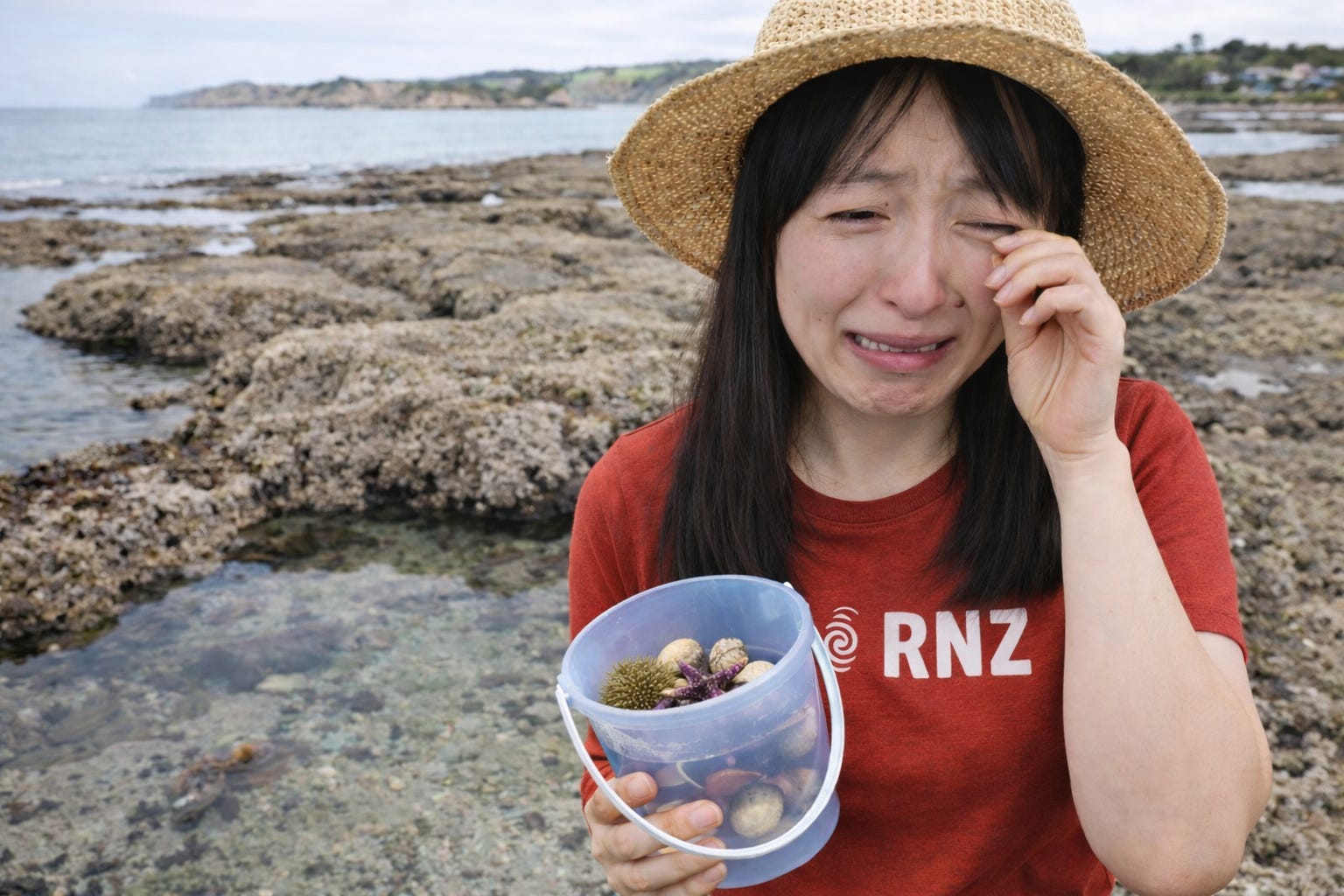
Let’s cut the bullshit. If a mob of Māori hopped a plane to Australia and started vacuuming their rockpools clean of every crab, starfish, limpet, and anemone that moved (screwdrivers in hand, buckets overflowing) Aussies wouldn’t politely whisper about “cultural differences.” They’d scream blue murder, call it what it is: pillaging, environmental vandalism, sheer bloody greed. The outrage would be instant, national, and unapologetic.
If white Kiwis flew en masse to China and stripped their intertidal zones bare, taking anything alive by the bucketload, the CCP wouldn’t hesitate: they’d brand it foreign plunder, whip up the nationalists, and boot the lot back across the Pacific. And rightly so. No one would cry “racism” when the locals told them to piss off home.
Here in New Zealand, when locals finally call out the systematic stripping of our coastlines (mostly by busloads of Chinese gatherers descending like locusts on Whangaparāoa, Army Bay, and beyond, chiseling out every last hermit crab, sea cucumber, and baby cockle) the response from the establishment is predictable: deflection, victimhood theatre, and finger-wagging from the state broadcaster.
RNZ’s Lucy Xia, whose article reads like a masterclass in bucket-clutching apologetics. She trots out anonymous sources fretting about hypothetical future harassment. One “Asian bloke” (who couldn’t even be named) whimpers that he’s now “nervous” about taking his kids to the beach (even if they don’t bring a bucket). People might say “hurtful” things. Oh, the humanity. Shut the whūk up. No one’s filming your family picnic or demanding you empty your esky unless you’re walking off with half the ecosystem in it. The fearmongering is pathetic: pre-emptive whining about slights that haven’t happened, while the rockpools lie barren.
Then comes Auckland-based “writer and researcher” Tze Ming Mok, freaking out over the term “bucket people.” It’s “creepy,” she moans; it’s a “racial slur” that “dehumanises communities.” shut up, Mok. When hordes arrive by the busload, armed with tools better suited to a demolition site than a day at the beach, and leave behind desolate pools where once life teemed, the label fits. It’s descriptive, not dehumanising (unless the shoe pinches because the behaviour is indefensible). She accuses ministers of “whipping up division” against a “small minority” instead of “constructively addressing the issue.” Funny how “constructive” always means shutting up and letting it continue.
Auckland uni student One Wang, of Chinese descent, who’s apparently an expert on tauiwi and Te Tiriti (because nothing screams authority like a lecture on tangata whenua from a Chinese import draping themselves in te reo while defending ecological plunder). They lecture us that the real crime is “labelling and online bullying” diverting attention from the “environmental issue.” We should focus on the whenua, papatūānuku, moana (by making “information and education accessible” so everyone can harvest “responsibly”). They even trot out the tired trope about the “rapacious Asian stripping coastlines” being a stereotype since the early ‘90s, and how “we” have approached this in good faith before, building bridges with iwi and government.
You’ll probably see Wang sporting a moko kauae in a year or so.
The “good faith” bridge-building clearly didn’t include telling your community to stop treating our moana like an all-you-can-eat buffet. The stereotype exists because the behaviour keeps happening, not the other way around.

This isn’t racism; it’s reality staring us in the face. Our intertidal zones aren’t infinite. Locals (Pākehā, Māori, whoever) have watched vibrant rockpools turn to watery deserts. Fisheries Minister Shane Jones is finally asking hard questions about immigration pressures and unsustainable limits. Iwi like Ngāti Manuhiri are begging for bans because the damage is “extensive” and may never recover. Yet instead of owning the problem, we get hand-wringing about hurt feelings and accusations of division.
