
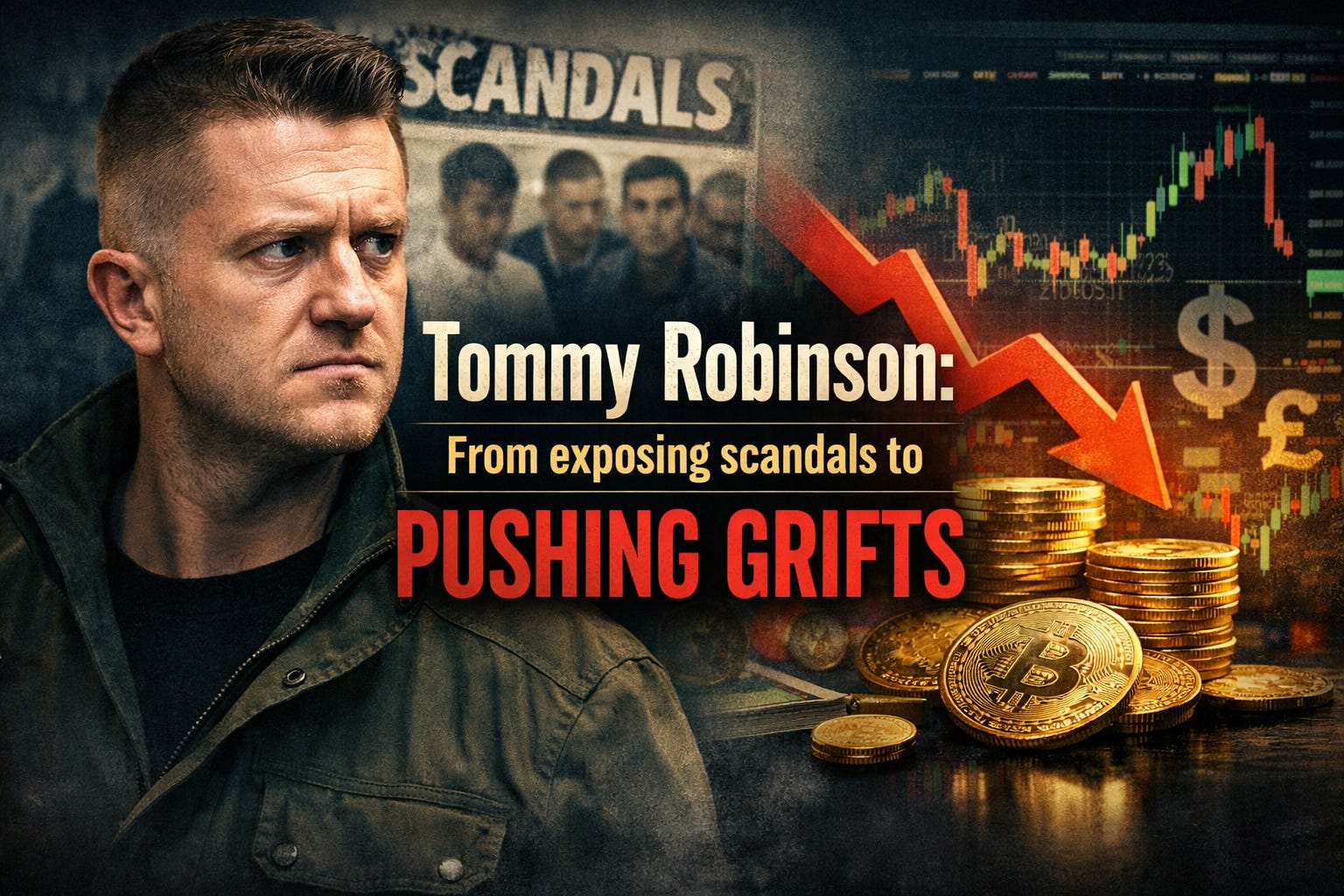
Tommy Robinson: From exposing scandals to pushing grifts
I used to quite like Tommy Robinson. Not because I agreed with everything he said or the way he went about it, but because some of his views on immigration in the UK struck a chord. He shone a light on grooming gangs, exposed scandals others were too scared to touch, and produced documentaries that actually asked uncomfortable questions. For a time, he had credibility. That credibility is now gone.
What replaced it looks far less like activism and far more like grift.
First came the dodgy meme coin, $UTK. Promoted during X Spaces under the banner of a project called “Unite the Kingdom”, Robinson claimed he knew little about the technical side but was more than happy to encourage his followers to pile in. Some did, investing thousands of pounds. Many are now reportedly sitting on holdings worth barely a tenner. A textbook outcome in the world of crypto hype.
What makes it worse is that Robinson was warned. Repeatedly. Concerns were raised that $UTK had all the hallmarks of a rug pull. He pushed it anyway. And while he played the innocent on the mechanics, it stretches belief to think he didn’t understand the incentives. In projects like this, someone always gets paid on the way up. It just isn’t the people at the bottom.
Now we’re onto phase two. Robinson is pushing followers toward a trading platform, complete with a polished video and a sales pitch dressed up as friendly advice. He insists there are no referral codes, no fees, no catches, just mates making money and results that are “hard to ignore”. We’ve heard this script before. Every time.
“I’m not usually one to post about trading tools,” is the opening line every influencer uses right before doing exactly that. The claim that “every single person” who got early access made money is not evidence, it’s marketing. And telling people to trust a platform because “loads of my friends” are using it is not transparency, it’s social proof theatre.
This is what’s actually disappointing. Not that Robinson is wrong about immigration, or that he’s abrasive, or even that he’s polarising. It’s that someone who built an audience by calling out corruption and exploitation now appears comfortable flirting with the same behaviour when there’s money to be made.
We’ve seen how this ends. Big influencers pushing speculative junk to loyal followers, then shrugging when it collapses. From Haliey Welch and the $HAWKTUAH fiasco, to even here in New Zealand with examples like Jimi Jackson and his KiwisnKangaroos NFT project, the pattern is always the same. Hype first. Disclaimers later. Accountability never.
If you spend years telling people the system is rigged and elites are exploiting ordinary punters, you don’t then turn around and funnel your audience into high-risk crypto and trading schemes while playing dumb about the consequences. You can’t be the bloke exposing scams one minute and hawking them the next.
.


