
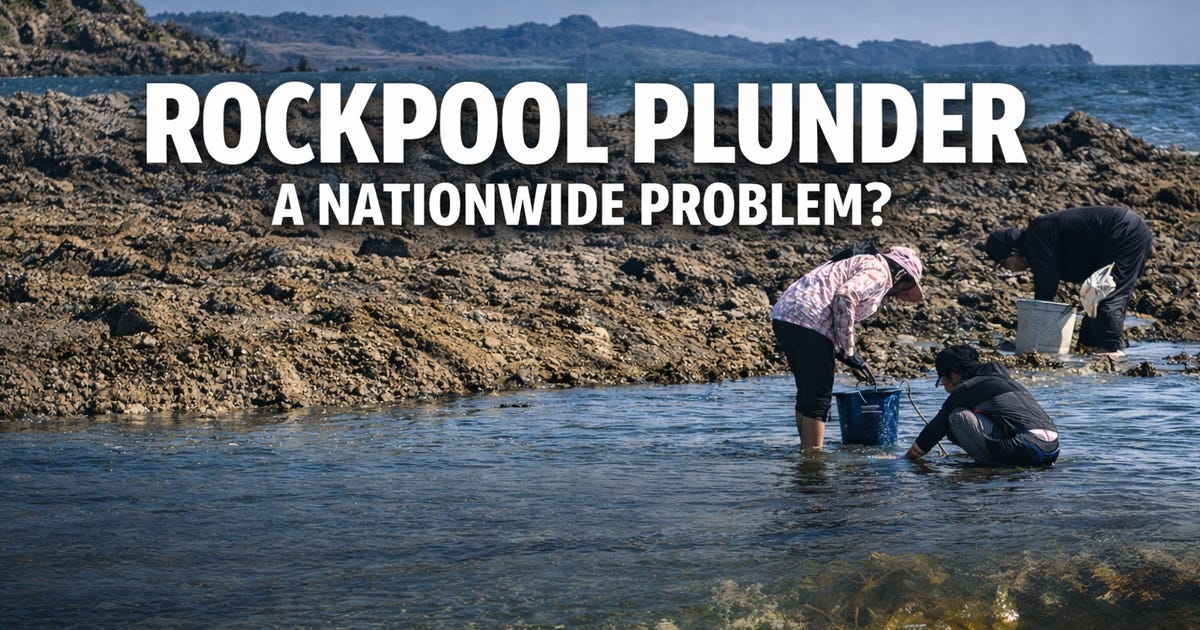
Rockpool ban is a start, but New Zealand says the problem is everywhere
After I posted my piece on NZ First implementing a rockpool ban around the Whangaparāoa Peninsula, the response was immediate and loud. People came forward from well beyond Auckland, including as far south as Banks Peninsula, saying the same thing is happening there too. Rockpools being stripped bare, intertidal life disappearing, and locals left staring at empty rocks where there used to be movement, colour, and abundance.
It confirms what many of us already suspected. The “rape of the rockpools” is not just a local problem. It is a nationwide one.
A few people criticised the Government for only acting now. That frustration is fair, but the likely reality is simpler, these closures do not appear out of thin air. They usually follow requests, evidence-gathering, and formal submissions. If the submissions were only put forward recently, that explains why the ban has only just landed.
The good news is this. Now that the framework is in place, it should be much easier to use it again. If other communities start documenting the stripping, reporting it properly, and pushing for action, there is no reason this approach cannot be rolled out to other hotspots.
Because honestly, who needs to take starfish, catseyes and seaweed from rockpools? What is the point?
I can understand kina. I have found some decent sized ones in remote rockpools before, and they made a good feed. But the rest of it looks less like “gathering” and more like organised stripping for greed, not need.
So here’s the bigger question. Why not just implement a simple, nationwide circuit-breaker: a two-year ban on all intertidal zone harvesting, with limited exceptions where there is a clear environmental or management case, like kina?
At this point, the only people who would really miss out are the busloads of Chinese turning rockpools into a personal buffet and leaving nothing behind.


