There is something deeply unserious about the online pile-on aimed at Aroha Collective, a Surfers Paradise brand that has committed the supposed crime of using the word aroha in its name.
Not stealing culture.
Not mocking Māori.
Not selling cheap tiki junk.
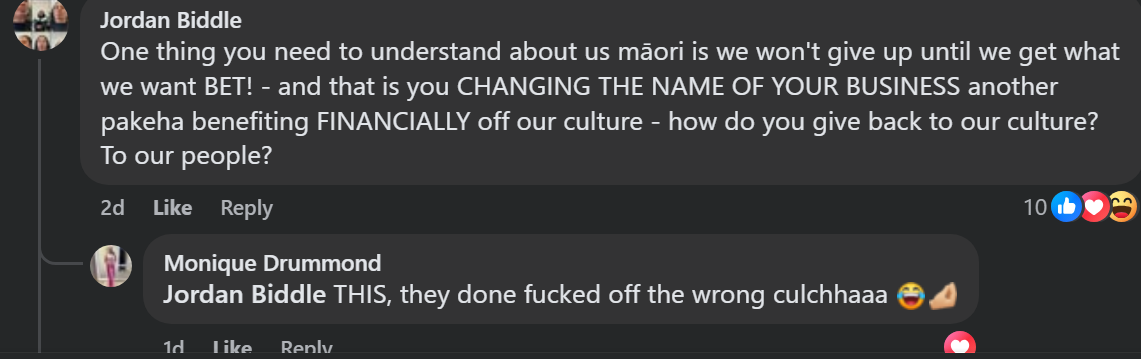
Just using a Māori word we are constantly told everyone should learn, celebrate, and normalise. Across Facebook, TikTok, and Instagram, the outrage machine fired up immediately. Accusations of “appropriation”, demands for apologies, calls for boycotts. Enough noise that the company’s CEO, Katie Bourke, felt forced to publicly explain herself just to calm the mob.
This is where the contradiction becomes impossible to ignore.


For years, we have been told te reo Māori is a beautiful language that should be shared. That we need more speakers. That hearing it used in everyday life is progress. Businesses are actively encouraged to adopt Māori words as a sign of respect and inclusion.
Until the “wrong” person does it.
Suddenly, the same word politicians, councils, and corporates insist should be everywhere is off-limits. Not because it is being misused, but because it is being used by a non-Māori woman running a fashion brand on the Gold Coast.
What makes this even more absurd is the deafening silence in the other direction. There are tens of thousands of Māori-owned businesses using English names, English slogans, and English legal structures. Nobody screams “appropriation”. Nobody demands apologies. Nobody launches online campaigns. Nor should they.
Language does not belong to ethnic groups in perpetuity. Either a language is meant to be shared, or it is meant to be fenced off. It cannot be both.
The uncomfortable truth is this that telling people they must learn te reo Māori while attacking them for using it is not inclusion. It is not respect. It is not progress. It is racism wrapped in moral language.
Honestly, the entire episode has been unintentionally hilarious. A brand called Aroha Collective gets abused for spreading a word that literally means love, compassion, and care. The response is hostility, harassment, and performative outrage from people who seem far more interested in control than culture.
You cannot demand engagement and then punish participation.
You cannot preach openness while enforcing ethnic ownership of words.
You cannot claim the moral high ground while acting as the self-appointed language police.
If aroha is only acceptable when spoken by the “right” people, then stop pretending this is about unity. Just admit it’s about power and racism.
If you believe in supporting small businesses that refuse to cave to online mobs, head to https://arohacollective.co/en-nz and check out Aroha Collective for yourself.
A lot of the outrage here is coming from Māori who are less interested in protecting te reo than in policing who is allowed to succeed. If this was truly about language, the response would be calm, consistent, and principled. Instead, it has been loud, personal, and venomous. That tells you this is not about aroha. It is about resentment.
What seems to have really upset some people is not the use of a Māori word, but who is using it. A confident, attractive white woman running a successful brand on the Gold Coast. Clean branding. Strong campaigns. Tens of thousands of followers. For some Māori who have been told the world owes them something, that kind of visible success is intolerable. Scroll through the worst comment threads and you don’t see entrepreneurs or builders of anything. You see grievance, entitlement, and people whose lives appear stuck on benefits, angry at someone who is clearly moving forward.
At that point, “cultural appropriation” becomes a shield. It is easier to scream racism than to admit jealousy. Easier to moralise than to work, compete, or create. When Māori attack others for using te reo while living entirely in English, relying on benefits, and producing nothing themselves, this stops being about culture. It becomes bitterness disguised as activism. That behaviour does more damage to te reo than any Australian fashion brand ever could.