In the sun-drenched shores of Auckland’s Whangaparaoa Peninsula, a silent atrocity unfolds daily, one that reeks of greed, entitlement, and utter disregard for New Zealand’s fragile marine ecosystems. Our rockpools, once teeming with life, are being systematically raped by hordes of Chinese families and groups, known as the Bucket People, who descend like locusts on our coastlines, stripping them bare with tools more suited to a construction site than a beach. This isn’t foraging; it’s pillage on a grand scale, and it’s high time we called it what it is: environmental rape, perpetrated with impunity while authorities twiddle their thumbs.
Take it from Mark Lenton, a steadfast Army Bay resident who’s been documenting this carnage for years. As the founder of the Protect Whangaparaoa Rockpools group, Lenton has witnessed the transformation of vibrant intertidal zones into desolate wastelands.
“In the 1970s, you could gather as many cockles as you wanted within a few minutes,” he recalls. But now?
“The rocks around Whangaparaoa are completely bare. The only thing you’ll find in the rock pools is seawater after every tide.”
Lenton points the finger squarely at busloads of Chinese harvesters arriving with buckets, piano wire, and building tools, ravaging everything in sight, from tiny cockles no bigger than your thumbnail to kina the size of a Kinder Surprise egg. People have been threatened for daring to intervene, a chilling testament to the aggression fueling this destruction.
Lenton isn’t alone in his outrage. Local iwi, like the Ngāti Manuhiri Settlement Trust, are sounding the alarm. Chief executive Nicola MacDonald describes the damage as “extensive,” noting how the removal of shellfish from rockpools devastates marine life that may never recover.
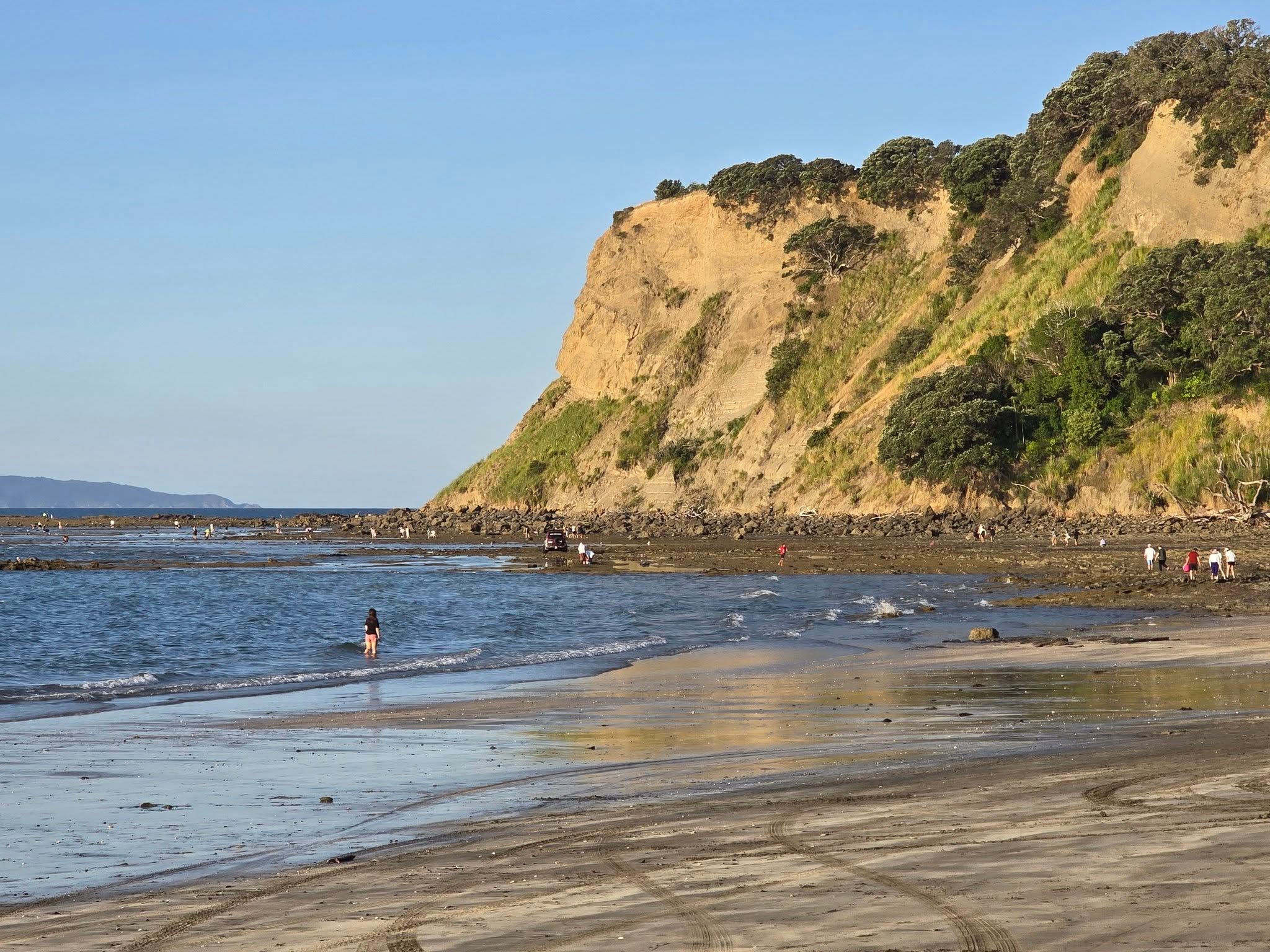
“We’re concerned because coastal marine life plays an important role in healthy ecosystems, providing habitats and food for insects, small fish, and seabirds,” she says. “Taking and removing rock shellfish and stripping away pools is not part of New Zealand culture.”
Indeed, examples abound: Mussel rocks at Pākiri Beach now stand utterly devoid of life due to relentless scavenging.
Further afield, Ōmaha Beach resident Mary Coupe paints a similarly grim picture. She’s spotted families hauling away massive bowls brimming with minuscule sea snails, so small you could fit ten on your fingernail, and even starfish, creatures that serve no real culinary purpose but are yanked out anyway in a frenzy of overconsumption. Coupe advocates for making the Tiaki Promise mandatory for visa applicants and new citizens, urging a shift from “consumer mentality” to guardianship of our environment.
This isn’t a broad “tourist” problem; community reports and eyewitness accounts repeatedly highlight Chinese groups as the primary culprits, stripping everything alive with a ruthless efficiency that’s decimating our shores.
Social media buzzes with fury from locals who’ve had enough. Posts in groups like Protect Whangaparaoa Rockpools decry “Chinese/Asian people raping it all,” with one resident even producing a documentary on how Chinese harvesters are destroying New Zealand’s marine life.
Reddit threads echo this, identifying Chinese families as the “biggest offenders,” turning once-abundant beaches into barren rocks.
Even historical gripes trace back decades, though the scale has exploded in recent years, leaving ecosystems irreparably harmed.
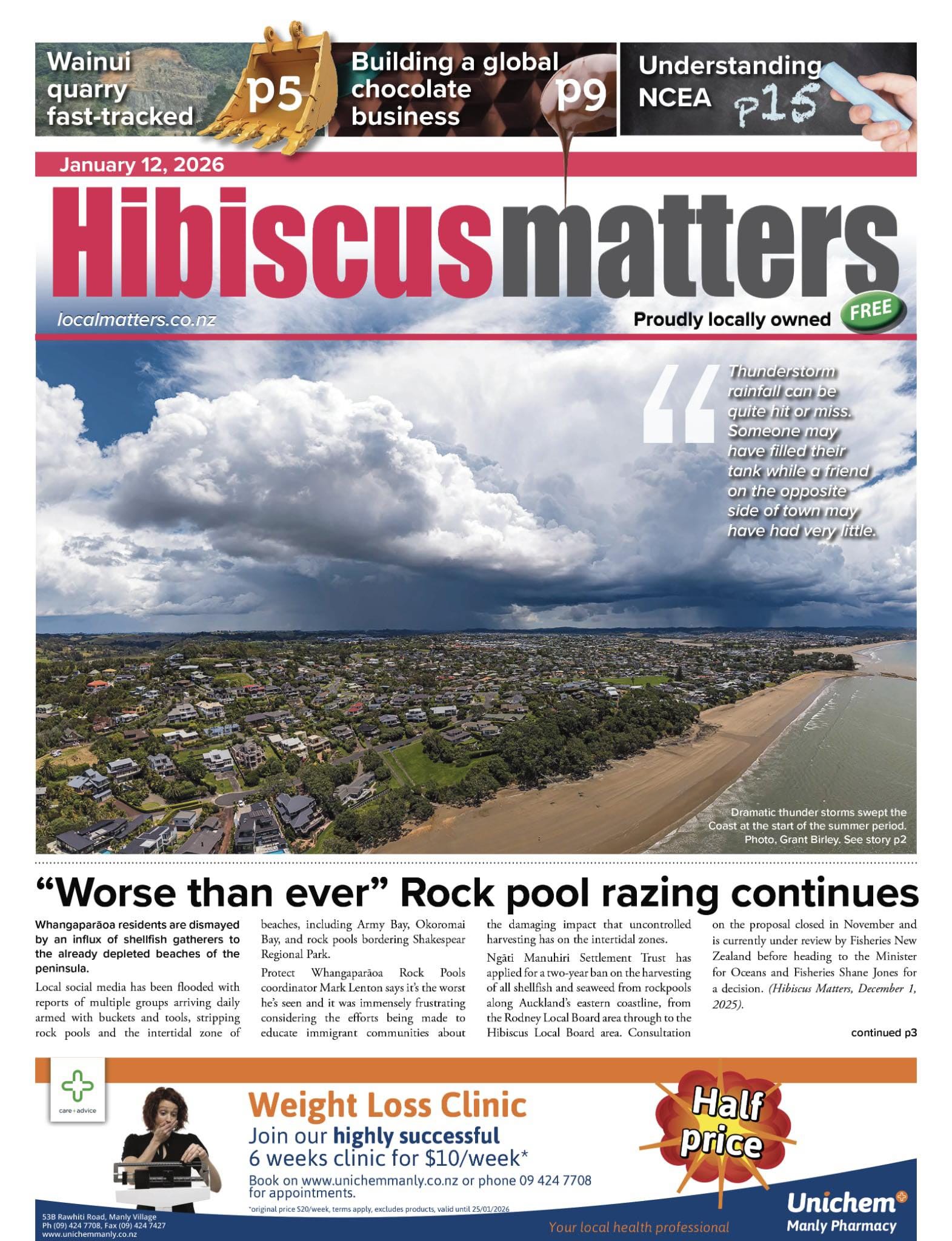
What galls most is the sheer hypocrisy. These invaders, often arriving in organized groups, treat our coastlines like an all-you-can-eat buffet, oblivious or indifferent to the fact that they’re obliterating food sources for seabirds, fish, and the very biodiversity that makes New Zealand unique. Seaweed? Gone. Snails? Vacuumed up. Even the humblest creatures aren’t spared in this orgy of extraction. And for what? A quick meal or a black-market buck, while our native species teeter on the brink?
Fisheries New Zealand’s response? Pathetic. With just 21 full-time officers and 38 honorary ones patrolling Auckland, they boast a 94% compliance rate, laughable when rockpools lie empty and reports of illegal activity flood in.
They urge the public to call 0800 4 POACHER, but where’s the proactive enforcement? Where are the bans, the patrols, the cultural education for those who clearly weren’t taught marine conservation back home?
Residents like Lenton are forced into vigilante “Bay-watch” patrols, risking personal safety because the government won’t step up.


This isn’t xenophobia; it’s a desperate cry to protect what’s ours. If Chinese communities want to integrate, they must adopt our values, sustainability, respect for nature, and leaving enough for tomorrow. Until then, calls for rāhui like the one at Karekare Beach might actually be worth it, and visas should come with mandatory conservation pledges.
New Zealanders, it’s time to rally: Report, resist, and reclaim our raped rockpools before they’re lost forever. Our marine life deserves better than to be decimated by unchecked greed.